
The energy transition is reshaping the foundations of our energy supply. More renewable energy, more decentralized generation and increasingly intelligent power grids are changing the way energy is generated, distributed and used.
With our remote control and automation technology, we help grid operators manage this transformation. But for us, there is another important question:
If our products are part of the energy transition, how can we also reduce their own environmental impact?
This is where our ecodesign approach begins.
A product designed for the energy transition should be designed with its own impact in mind
Remote control technology does not operate for just a few hours a day. It is in use for many years, collecting information, processing data and enabling communication across modern grid infrastructures.
This means that even a relatively small reduction in energy consumption can make a difference over a product’s long service life. When developing our SAE FW-5-GATE-4G series5X, we therefore did not want to wait until the finished product was available before asking how its environmental impact could be improved.
That question needed to become part of the development process itself.
Our principle is simple:
Analyze first. Understand the impact. Then improve where it matters.
Ecodesign means focusing on where we can make a real difference
We did not start by promising to develop a “greener” product. We started with data.
We analyzed which components and processes had the greatest influence on the environmental impact of the previous product generation. The results highlighted energy consumption during operation and certain electronic components as particularly relevant factors.
With this knowledge, we were able to evaluate technical alternatives and implement targeted improvements.
For us, this is what turns ecodesign from an abstract sustainability concept into a concrete part of product development.
The key question is not:
How can we describe a product as more sustainable?
It is:
Where can we actually reduce its environmental impact, and how can we make that improvement measurable?
The FW-5-GATE-4G shows what this approach can achieve
The new SAE FW-5-GATE-4G series5X provides a clear example of the impact this approach can have.
Its environmental impact was assessed according to the European Product Environmental Footprint Method 3.1 (PEF 3.1).
This life cycle assessment method goes beyond looking at a single factor such as electricity consumption. It considers 16 environmental impact categories, including climate change, particulate matter, acidification and the use of fossil, mineral and metal resources.
The result is tangible:
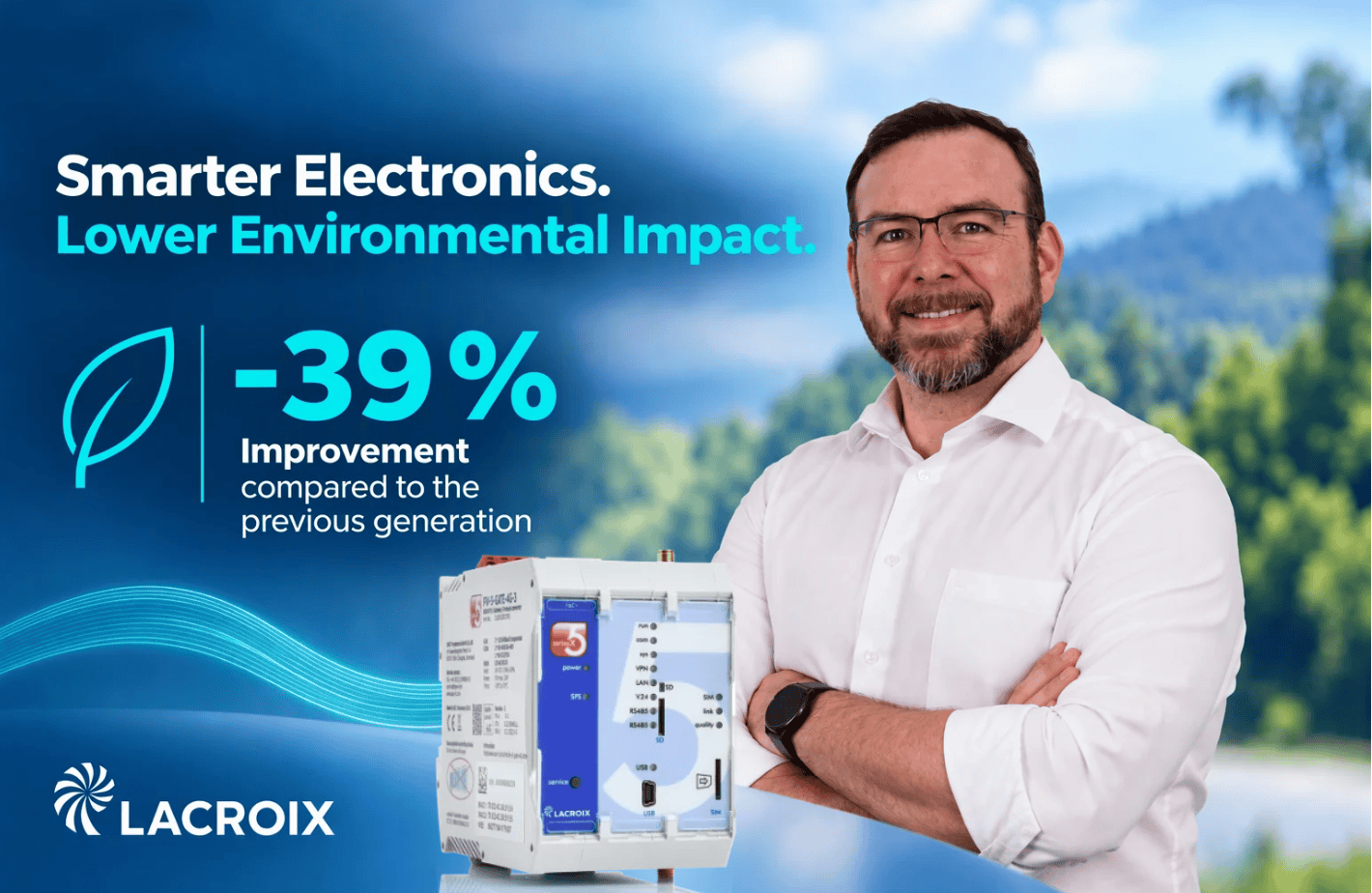
The SAE FW-5-GATE-4G series5X achieves an overall environmental footprint of 17.6 millipoints. Compared with the previous generation, this represents a 39% reduction. Improvements in individual environmental indicators range from 39% to 40%.
For us, this is the real story behind the figures.
Ecodesign can turn an ambition into measurable change
One of the biggest opportunities lies in everyday operation
The life cycle assessment also revealed where one of the most important levers can be found: in the energy consumed during operation.
For this reason, reducing energy requirements was a key focus of the product’s further development. Lower energy consumption not only affects electricity use itself but also contributes to improvements across several of the environmental indicators assessed.
This illustrates why we believe sustainability needs to be considered holistically.
A product’s environmental impact does not come solely from the materials required to manufacture it. Its impact develops throughout its entire life cycle.
For technology designed to operate continuously for many years, the use phase therefore plays a particularly important role.
Reducing environmental impact without losing sight of the product’s core purpose
When it comes to critical infrastructure, sustainability cannot mean compromising in the wrong areas.
Remote control technology needs to reliably collect, transmit and process information. The FW-5-GATE-4G therefore combines its core remote control functions with capabilities including cybersecurity functions, cloud connectivity and interoperable communication.
Environmental optimization is part of this technological development, not a replacement for it.
The integrated mobile communications modem can also contribute by potentially reducing the number of additional components required in the control cabinet, depending on the system design.
Remote access, diagnostics and troubleshooting can also help reduce certain on-site service activities. The actual impact, however, depends on the individual operating and service concept.
For us, making this distinction is important.
Not simply “greener”, but more transparent
Even an optimized electronic product requires raw materials. It needs to be manufactured, and it consumes energy during operation.
Our ecodesign approach is not intended to hide this reality behind broad sustainability claims.
Quite the opposite.
Our goal is to make environmental impact visible, comparable and transparent.
The environmental assessment of the FW-5-GATE-4G is therefore not intended to claim that a product is simply “sustainable”.
Instead, it demonstrates what has actually improved compared with the previous product generation, based on a defined assessment methodology.
For grid operators, this creates an additional basis for decision-making. Alongside technical performance, documented information about environmental impact can also be considered when making procurement and investment decisions.
Our ambition: Not only enabling the energy transition, but thinking it through
For us, the FW-5-GATE-4G is therefore more than the next generation of a remote control solution.
It represents an approach we want to continue pursuing: developing products for a more sustainable energy infrastructure while also critically examining the environmental impact of the products themselves.
The energy transition needs intelligent and reliable power grids. But it also requires the willingness to continuously question existing solutions and improve them wherever improvements are both possible and measurable.
The SAE FW-5-GATE-4G series5X demonstrates the difference this ecodesign approach can make:
39% lower environmental impact compared with the previous generation based on the PEF 3.1 assessment.
For us, this is not the end of the journey.
It is a measurable step towards bringing technology and environmental responsibility closer together.
What is the environmental impact of your investment?
With our footprint analysis, we support municipalities, energy suppliers and industrial companies in assessing the environmental effects of technological solutions in a transparent and data-driven way.
The analysis is based on a scientifically grounded methodology inspired by the “Empreinte Projet” approach developed by the French Environment and Energy Management Agency ADEME.
Interested in a footprint analysis?
Contact us at marketing.sae@lacroix.group.