
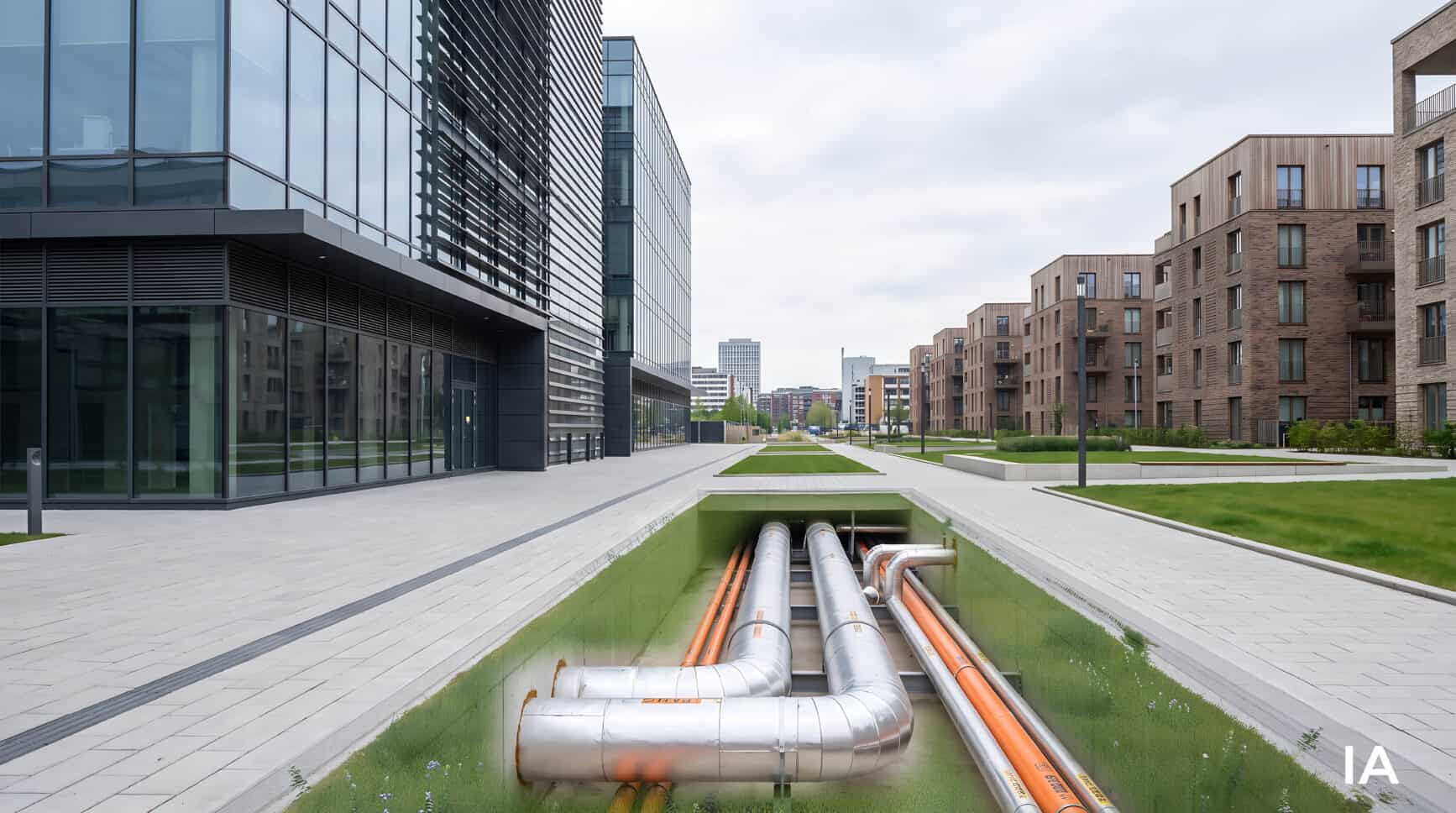
Remote monitoring and automation solutions for district cooling networks
For operators, managing these networks means monitoring and controlling numerous assets distributed across the network: cooling plants, pumping stations, cooling substations, heat exchangers, energy meters, control valves and HVAC equipment.
SOFREL S4TH and B4TH connected controllers provide the monitoring, control and automation functions required to efficiently operate these installations.
SOFREL connected controllers for district cooling network facilities
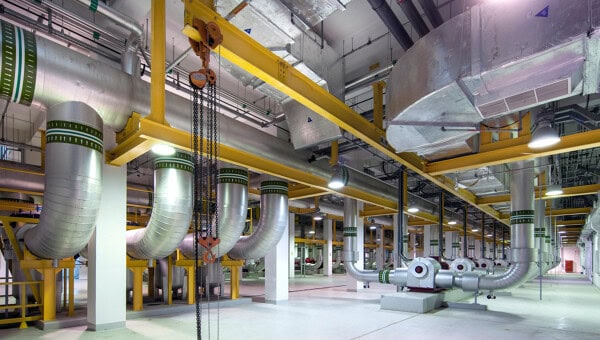
Cooling production plant
At the heart of a district cooling network, the cooling plant produces the chilled water distributed to connected buildings. Depending on the installation, cooling production can be combined with thermal energy storage or free cooling to improve overall energy efficiency.
SOFREL S4TH and SOFREL B4TH connected controllers enable the monitoring and control of cooling production equipment, including:
- chillers;circulation pumps;
- cooling towers;
- thermal energy storage systems;
- measuring instruments and energy meters.
Operators benefit from real-time visibility of plant operation, with continuous monitoring of temperatures, flow rates, energy consumption and equipment status.
Data acquisition, alarms and remote control help operators monitor plant performance, identify operating drifts and facilitate maintenance operations.
Pumping stations
Pumping stations circulate chilled water between the cooling production plant and the buildings connected to the network. Located at strategic points throughout the network, they help maintain the flow rates and pressures required to distribute cooling according to demand.
SOFREL S4TH and SOFREL B4TH provide:
- pump control;
- pump rotation and backup management;
- variable speed drive control;
- network pressure monitoring;
- immediate reporting of operating faults.
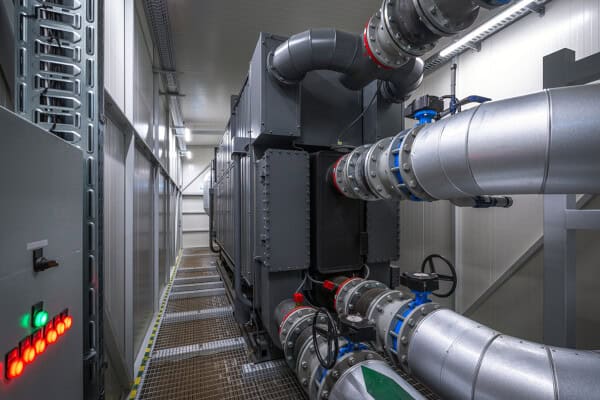
Cooling Substations
Cooling substations provide the interface between the district cooling network and the installations within each connected building. Through heat exchangers, they enable cooling energy to be transferred from the primary network to the building’s internal cooling system.
SOFREL connected controllers can be used to manage and monitor:
- heat exchanger regulation;
- control valves;
- supply and return temperatures;
- flow rates;
- energy metering;
- equipment operating status;
- performance monitoring.
The SOFREL HVAC range already provides functions for regulating heat exchange, communicating with energy meters and recording temperatures and flow rates.
Building HVAC systems
In connected buildings, HVAC systems use the cooling energy supplied by the district cooling network to provide the required indoor comfort.
Continuous monitoring and optimization of these installations help maintain expected performance while limiting energy consumption.
SOFREL S4TH and SOFREL B4TH enable:
- control of Air Handling Units (AHUs);
- temperature setpoint management;
- operation according to occupancy schedules;
- energy consumption monitoring;alarm and fault management;
- operating data logging.
From cooling production plants and pumping stations to cooling substations and building HVAC systems, district cooling networks rely on multiple interconnected assets that must operate efficiently together.
SOFREL S4TH and SOFREL B4TH connected controllers provide operators with the remote monitoring, control and automation capabilities they need to improve continuity of service, monitor energy performance and simplify the day-to-day operation of their district cooling infrastructure.