
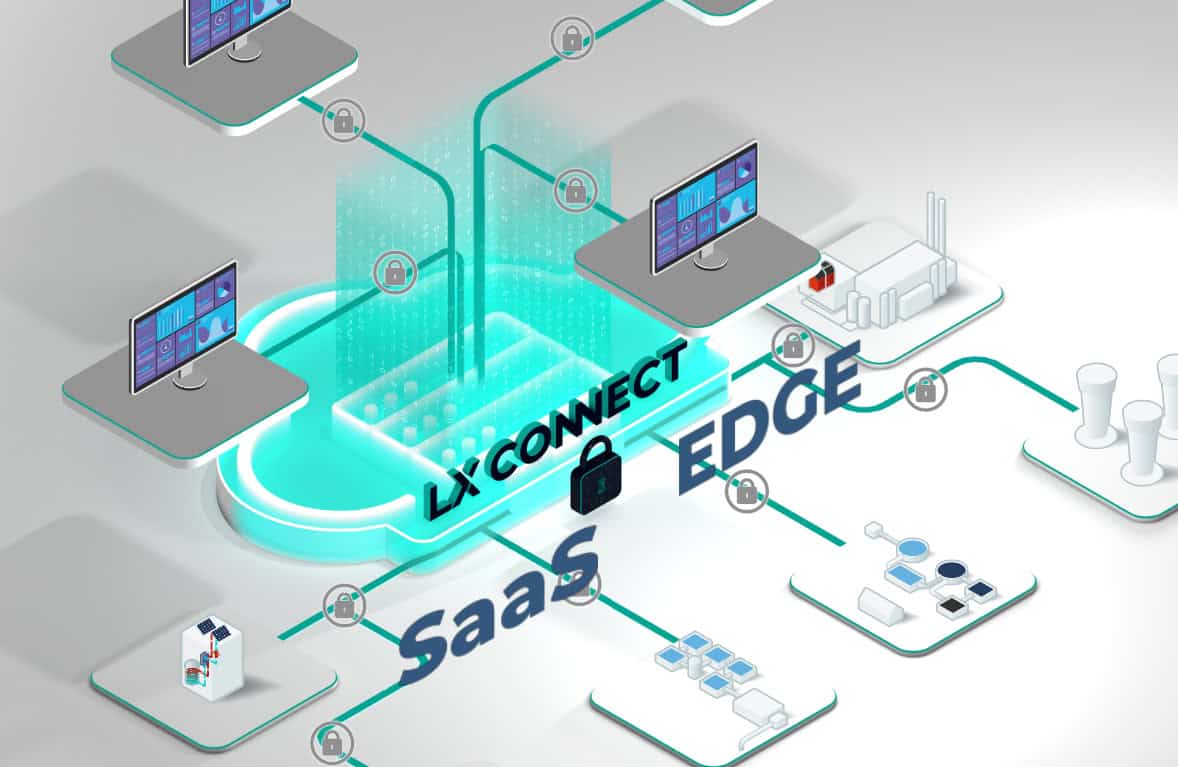
In this context, simply supervising installations is no longer enough. Operators need platforms capable of centralising devices, simplifying their administration and providing long-term support for their cybersecurity initiatives.
This is precisely the purpose of LX CONNECT, the centralisation platform developed by LACROIX for SOFREL devices.
What criteria should guide the choice between an EDGE architecture and a SaaS architecture? Nathalie YQUEL, LX CONNECT Product Manager at LACROIX, provides some answers.
Centralise to improve operations, strengthen security and address NIS2 challenges
Modern critical infrastructure networks rely on a growing number of connected devices: RTUs, data loggers, sensors, SCADA systems and business applications.
Effectively managing this ecosystem requires the ability to:
- Accurately identify deployed devices;
- Monitor their software versions;
- Manage users and their access rights;
- Ensure the automatic renewal of cybersecurity certificates;
- Deploy security patches;Centralise data collected from field devices;
- Share data with the operator’s SCADA systems and business applications;
- Run scheduled mass update campaigns for embedded software across the entire device fleet.
LX CONNECT addresses these challenges through a single platform that enables operators to manage their SOFREL telemetry device fleet, centralise data and automate software maintenance and cybersecurity tasks.
This approach is fully aligned with the best practices currently promoted through cybersecurity initiatives and frameworks such as NIS2. Without replacing the governance or risk management requirements set out by the Directive, the platform helps operators maintain better control over their connected devices, access rights and security posture.

As cybersecurity and regulatory challenges become increasingly important, operators need a comprehensive view of their connected devices. LX CONNECT was designed to enable them to centralise the administration of their device fleet, simplify maintenance operations and support the implementation of cybersecurity best practices.
Nathalie YQUEL, LX CONNECT Product Marketing Manager
A centralisation platform to support network evolution, enhance security and address NIS2
Not all water and HVAC infrastructures have the same requirements. Some local authorities operate only a few devices distributed across their territory, while major operators may need to manage several thousand connected devices across extensive networks.
LX CONNECT was designed to support this diversity. The platform evolves alongside the network it manages, enabling operators to expand their device fleet without having to overhaul their tools or operating methods.
LX CONNECT and NIS2: a key enabler for cybersecurity initiatives
NIS2 compliance cannot be achieved through a single software solution. It requires a comprehensive approach encompassing governance, risk management, access control, system monitoring and maintaining systems in a secure state.
By providing a centralised view of the device fleet and simplifying its day-to-day administration, LX CONNECT helps operators implement more effectively the best practices now expected for critical infrastructure.
NIS2 is encouraging operators to adopt a much more comprehensive approach to cybersecurity. LX CONNECT provides them with the tools they need to gain better control over their connected devices, simplify their administration and make it easier to implement cybersecurity best practices in the field.
One objective, two deployment models
There is no single architecture that is inherently better than another.
The choice depends primarily on the size of the network, the organisation’s digital maturity, the IT resources available and its operational constraints. To address these different contexts, LX CONNECT is available in two complementary deployment models: LX CONNECT EDGE and LX CONNECT SaaS.
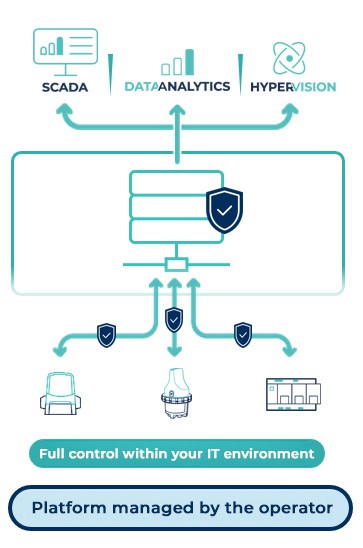
LX CONNECT EDGE: retain control of your infrastructure
LX CONNECT EDGE is deployed on a virtual machine installed within the operator’s IT environment.
This approach is designed primarily for organisations that already have a structured IT infrastructure and want to retain full control over their digital environment.
It is particularly well suited to large local authorities, major public utilities or operators with IT teams capable of administering their information systems.
LX CONNECT EDGE is ideally suited to operators who want to integrate the platform into their own information system and retain full control over their hosting architecture.
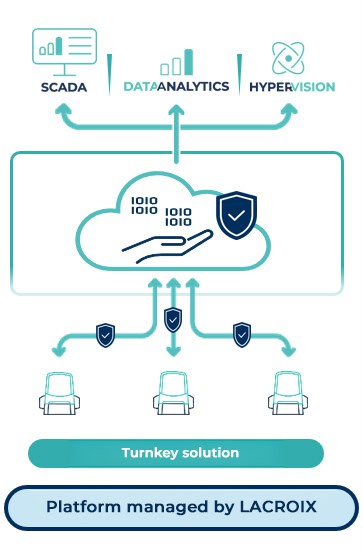
LX CONNECT SaaS: a turnkey solution that is easy to deploy
Other operators are primarily looking for a solution that is simple to implement, with no infrastructure to deploy and no servers to maintain.
This is precisely the purpose of LX CONNECT SaaS.
Hosted on sovereign servers in France (Scaleway), LX CONNECT SaaS provides direct, subscription-based access to the centralisation platform’s features in a secure environment.
In this configuration, the platform is hosted and managed by LACROIX. Users simply access its services through a web browser, with no local installation or specific system administration required.
The main benefits include:
- Rapid commissioning;
- No IT infrastructure to manage;
- Automatic updates;
- Centralised cybersecurity management;
- Data backup;
- Continuous platform evolution.
This approach enables local authorities and operators with limited IT resources to quickly access advanced device fleet management, data sharing and cybersecurity capabilities without having to invest in dedicated infrastructure.
With LX CONNECT SaaS, our objective is to enable operators and local authorities to focus on their core business. We take care of hosting and administering the platform so that they can benefit from its capabilities immediately.
Choosing the right architecture for your organisation
The real question, therefore, is not whether EDGE is better than SaaS, or vice versa.
The right question is: Which architecture is best suited to my organisation?
A large public utility or operator with a structured IT team will generally favour an EDGE architecture.
A local authority, public utility association or operator looking to accelerate its digital transformation without having to manage dedicated infrastructure can rely on a turnkey SaaS solution.
Our objective is not to set EDGE and SaaS against each other. The two architectures address different needs. The real challenge is to offer each operator the solution best suited to their organisation, their level of digital maturity and their cybersecurity ambitions.
Supporting the evolution of critical infrastructure networks
Water and HVAC infrastructure must now combine operational performance, data utilisation and cybersecurity.
By offering two complementary deployment models, LX CONNECT enables each operator to adopt an architecture aligned with their resources, organisation and digital transformation objectives.
A single, scalable and secure platform capable of supporting both small networks and large-scale critical infrastructure.