
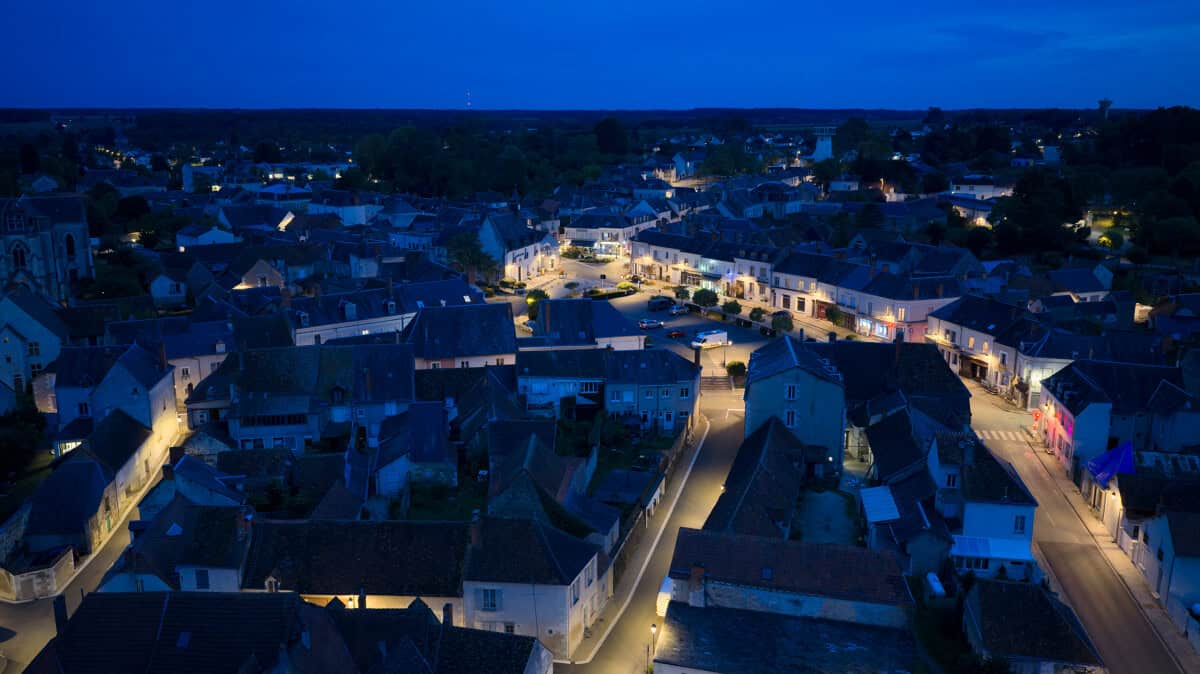
In a context of growing budgetary constraints, stricter environmental requirements, and increased expectations in terms of safety and quality of life, local authorities need to evolve the way they manage their street lighting. Long considered a simple technical facility, lighting is now a strategic lever for the attractiveness, performance, and sustainable development of local areas. Smart, connected public lighting is fully in line with this transformation, enabling more efficient, responsible, and controlled operation.
Controlling investment and operating budgets
Faced with increasingly tight budgets, local authorities must be able to achieve and justify measurable energy savings, invest wisely, and optimize human and material resources. Smart public lighting management makes it possible to adjust lighting levels according to actual needs, optimize lighting times, and prioritize investments, while ensuring accurate monitoring of energy consumption and savings achieved.


Ensuring the attractiveness and safety of the city and its users
Public lighting plays an essential role in the well-being of citizens and in the feeling of safety in public spaces. It must guarantee lighting that is adapted to different uses, at the right level, at the right time, and in the right place. The ability to monitor the network in real time, quickly detect anomalies, and intervene effectively is crucial to ensuring continuity of service, limiting risks, and responding to security challenges, including cybersecurity.
Simplify the operation of the public lighting network
The diversity of equipment and the increasing complexity of infrastructure sometimes make it difficult to manage the operation of the public lighting network. Local authorities need intuitive and user-friendly digital tools to view the status of the network, map installations, analyze faults, and facilitate interventions. Simplified operation increases responsiveness, reduces unnecessary travel, and supports teams in the deployment and use of solutions, with expert support when needed.

Cultivating a sustainable and ingenious region and preparing for the future
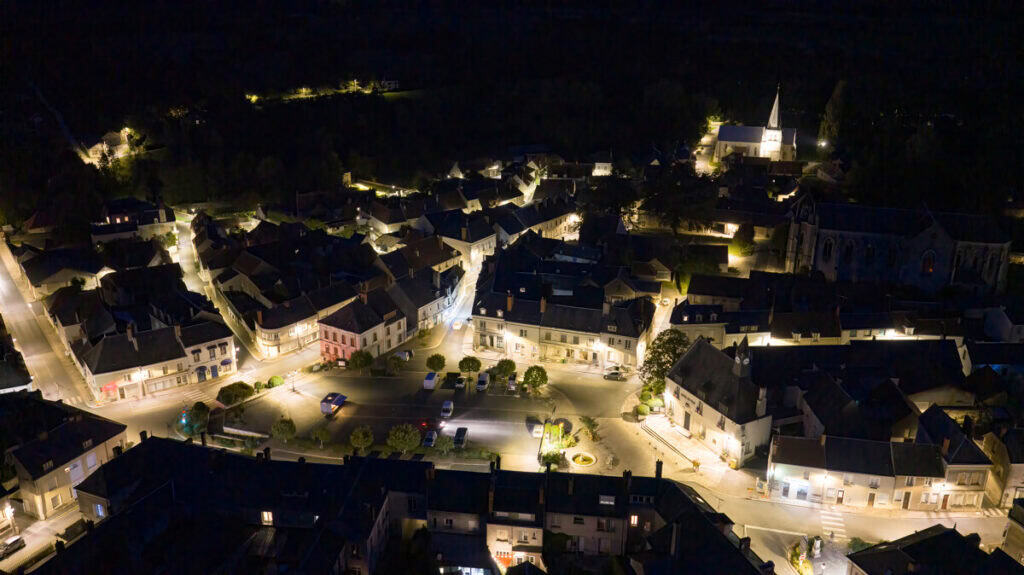
Committed to ecological transition initiatives, local authorities are seeking to reduce their environmental impact while capitalizing on existing investments. Smart public lighting is a major lever for reducing energy consumption, limiting light pollution, and preserving biodiversity, thanks to adapted dimming scenarios and autonomous detection systems. In addition, local authorities must anticipate future developments by relying on open, interoperable solutions that are compatible with other systems, in order to enable the pooling of infrastructure and the integration of new services.
Tegis supports you
Smart public lighting is a major strategic lever for local authorities, addressing the challenges of budget control, user safety, operational performance, and environmental transition.
Tegis supports local authorities in managing their public lighting infrastructure through a centralized platform that allows them to remotely manage installations, adjust lighting levels as needed, and optimize lighting times, while ensuring accurate monitoring of energy consumption.
The solution helps to guarantee appropriate, reliable, and secure lighting, using configurable scenarios and real-time monitoring of the network, facilitating the detection of anomalies and rapid response times.
Open and scalable, Tegis simplifies operation and enhances existing infrastructure, while facilitating the integration of new uses and contributing to a responsible and sustainable lighting approach for local areas.